
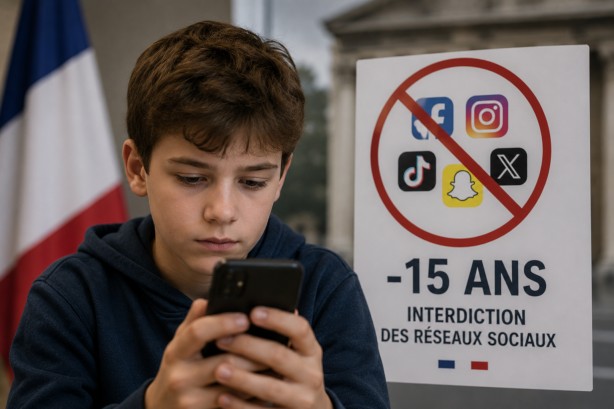
In a significant step towards enhancing online safety for minors, France has enacted a groundbreaking law banning social media access for children under 15, marking it as the first European Union nation to adopt such a measure. Championed by President Emmanuel Macron, the legislation mandates that social media platforms must prevent users below 15 from creating accounts starting September 1. Additionally, existing accounts for this age group are required to be terminated by January 2027, with social media companies tasked with implementing robust age verification systems that safeguard users’ personal data.
The new law also introduces a prohibition on mobile phone usage within high schools commencing with the new academic year, while educational resources like online encyclopedias will not be affected by these restrictions. Proponents argue that this legislative move is crucial to shielding young people from the adverse mental health impacts linked to excessive social media engagement. Critics, however, have voiced concerns regarding privacy implications, the practicality of enforcing the law, and the potential for children to circumvent age verification protocols.
As France sets this precedent, the European Commission is concurrently exploring the possibility of instituting broader EU-wide policies aimed at safeguarding children in the digital realm. The Commission has initiated trials of a digital age-verification application across several member states, reflecting a growing international inclination towards stricter regulation of minors’ social media access.
French authorities emphasize that the onus of ensuring compliance with this new legislation lies with social media companies. These companies are expected to establish systems that effectively verify users’ ages while maintaining the privacy of personal information. This approach underscores the broader challenge of balancing children’s safety with privacy rights in the digital age.
France’s legislative move aligns with a global trend towards tighter controls over young people’s social media use, as nations worldwide grapple with the implications of digital environments on youth development and well-being. The law’s enactment and its future enforcement will be closely watched as a potential model for similar initiatives across Europe and beyond.