
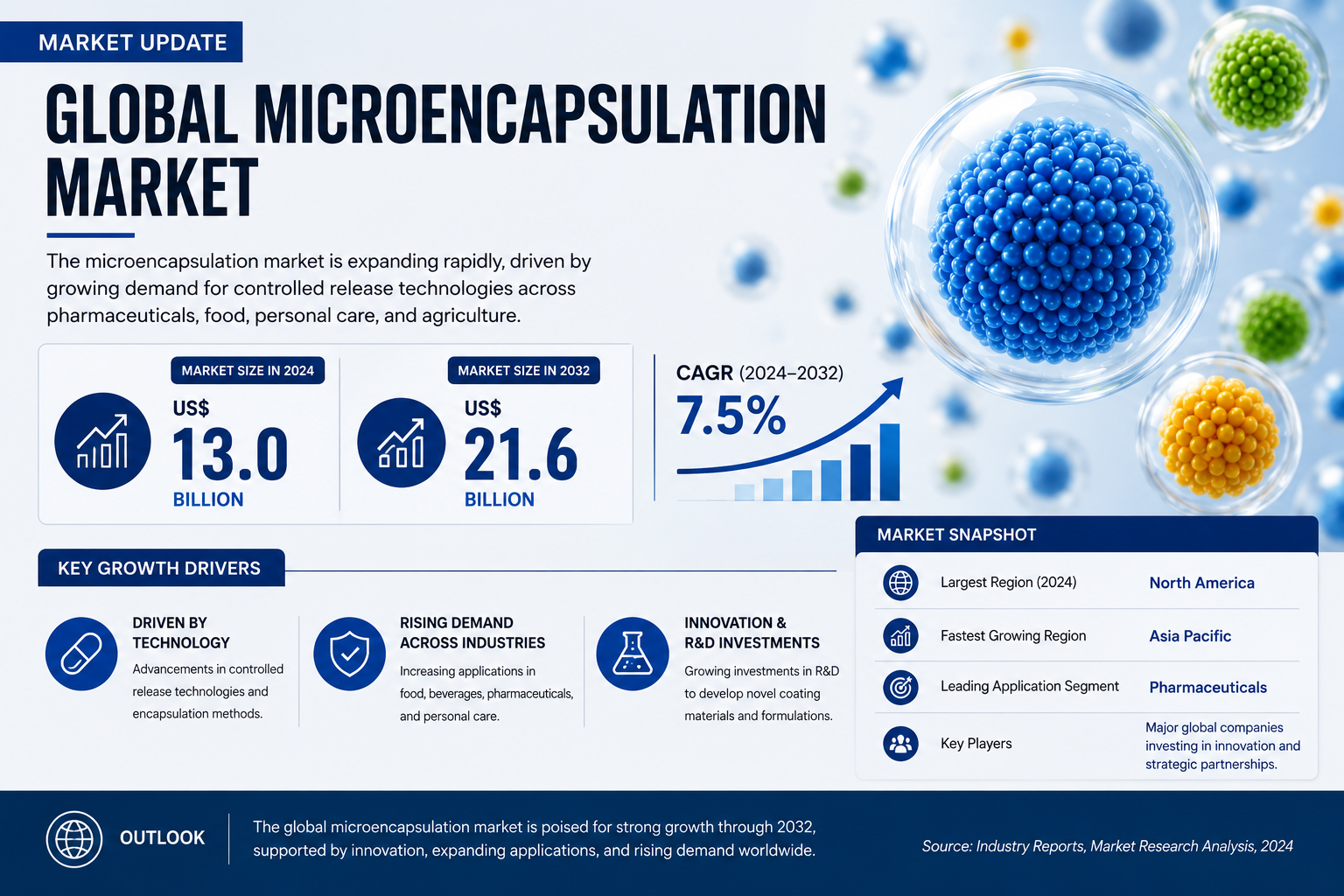
The global microencapsulation market is set for robust growth, with projections indicating its value will increase from $13.0 billion in 2026 to $21.6 billion by 2033, reflecting a compound annual growth rate of 7.5%. This expansion is driven by the rising demand for controlled-release ingredients and enhanced product stability across sectors like pharmaceuticals, food, personal care, and industrials. Industries are increasingly adopting microencapsulation technology for its precision delivery systems, ingredient protection, and innovative product formulations.
Microencapsulation is gaining traction in the food and beverage industry, where it is used to encapsulate vitamins, probiotics, and flavors, among others, to enhance nutritional value and taste stability. The trend toward functional and fortified foods is pushing manufacturers to adopt this technology to meet consumer demands for healthier options with extended shelf life. Similarly, the pharmaceutical and healthcare sectors are leveraging microencapsulation for controlled drug release, taste masking, and targeted delivery, driven by increasing healthcare expenditure and the prevalence of chronic diseases.
In the realm of personal care and cosmetics, microencapsulation is being utilized in products like perfumes, deodorants, and skincare items to enhance performance through encapsulated fragrances and stable active ingredients. The technology is also being embraced in agriculture, offering solutions for controlled release in fertilizers and pesticides, which supports sustainable farming practices by reducing chemical wastage and environmental impact. Furthermore, advancements in encapsulation technologies, such as spray drying and emulsion methods, are improving production efficiency and product quality.
Environmental concerns are prompting a shift towards sustainable and bio-based coating materials in the microencapsulation market. Manufacturers are increasingly using biodegradable materials like carbohydrates and plant-based polymers, aligning with clean-label trends and sustainability regulations. The Asia Pacific region is emerging as a high-growth market due to rapid industrialization and increased consumer awareness in countries like China, India, and South Korea, which are investing in manufacturing and research capabilities.
With companies ramping up research and development efforts to innovate advanced encapsulation systems, the microencapsulation market is poised for continued evolution. As industries demand improved ingredient protection and product differentiation, the market is expected to see sustained growth. This expansion will be fueled by rising demand for functional foods, personalized healthcare, sustainable agriculture practices, and premium personal care products, underscoring the market’s promising future through 2033.
Legal Disclaimer: The information contained in this article has been provided by independent third-party contributors, clients, or content partners. We do not independently verify the accuracy, completeness, legality, ownership, licensing, or reliability of submitted content, including text, images, videos, trademarks, or other media materials. The submitting party is solely responsible for ensuring that all content, including images and media assets, complies with applicable copyright, trademark, licensing, and intellectual property laws. We disclaim liability for any unauthorized use of copyrighted or proprietary materials by third parties. If you believe that any content published on this platform infringes your intellectual property rights, kindly contact the author above for prompt review and resolution.