
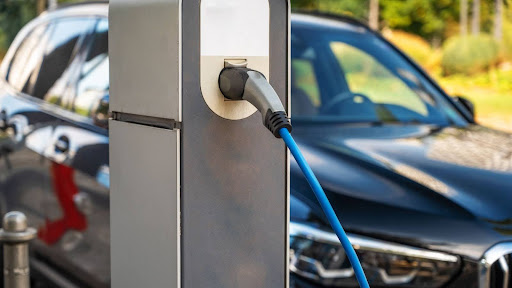
American climate policy has struggled for years to create the conditions necessary for rapid EV adoption. Financial incentives have been introduced and reversed. Emission standards have been tightened and then relaxed. California’s ability to set its own vehicle rules has been challenged. And through it all, US EV adoption has remained well below the levels seen in peer nations. Now, the Iran conflict — with its direct impact on gasoline prices — may be accomplishing through market economics what policy has failed to deliver.
Gasoline has reached $3.90 per gallon nationally, its highest average in nearly three years. The price spike traces to Iran’s closure of the Strait of Hormuz following US and Israeli military strikes — a disruption to the waterway through which roughly one-fifth of global oil flows. American consumers have absorbed the impact directly, and their response has been measurable: EV searches are up 20 percent in three weeks, according to CarEdge.
Justin Fischer at CarEdge described the surge as a direct market response to energy price signals — the kind of clear-cut behavioral reaction that policy advocates have long hoped price mechanisms would produce. Edmunds’ Jessica Caldwell pointed to the power of repeated, visible gasoline cost exposure as the key driver, noting that consumers in cities like Los Angeles are already making the social and financial contrast between EV and gasoline ownership a topic of active conversation.
The used EV market is the most immediate beneficiary of this market-driven push. Pre-owned models from Tesla, Nissan, and Chevrolet at sub-$25,000 prices are making electric transportation accessible to a much broader range of buyers than new vehicle pricing allows. Caldwell said these vehicles are likely to sell quickly as awareness of their affordability and the financial case for electric transportation grows.
The comparison with climate policy outcomes is instructive but complicated. Market signals like high gas prices are powerful but temporary — they fade when prices normalize. Policy, at its best, creates durable structural change. The ideal outcome would be for the current market signal to reinforce and accelerate the kind of policy commitment and infrastructure investment that would sustain EV adoption long after the Iran conflict resolves and gas prices stabilize.