
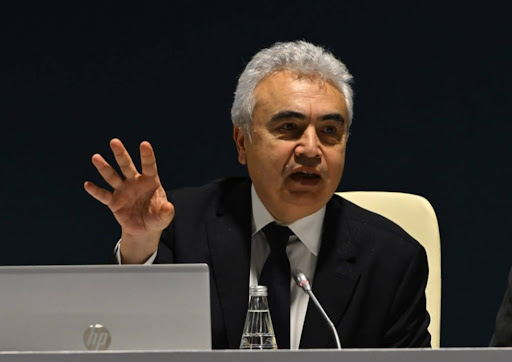
The global energy crisis triggered by the Iran war should serve as a powerful wake-up call for nations that had assumed their energy security was guaranteed, according to Fatih Birol, the head of the International Energy Agency. Speaking in Canberra, the IEA chief said the speed with which a global oil surplus was converted into a dangerous shortage should prompt every government to rethink its energy security strategy. He described the overall crisis as equivalent to the combined force of the 1970s oil shocks and the Ukraine gas emergency.
Birol noted that world leaders failed to initially recognize the depth of the crisis when US and Israeli strikes on Iran began on February 28. The closure of the Strait of Hormuz and extensive damage to Gulf energy infrastructure — with at least 40 major assets severely affected — rapidly produced oil losses of 11 million barrels per day and gas losses of 140 billion cubic metres. These figures are unprecedented in the modern energy era.
The IEA responded on March 11 with its largest ever emergency reserve release of 400 million barrels, representing 20 percent of available stocks. Birol said further releases remained possible and that the IEA was in active consultation with governments across three continents. He also pushed governments to implement demand-reduction measures including remote working, lower speed limits, and reduced flights.
The Hormuz strait, through which about 20 percent of global oil flows, continues to be closed to commercial shipping, creating fuel shortages across Asia and Europe. The Asia-Pacific region has been particularly hard hit, and Japan indicated it could deploy military assets for minesweeping if a ceasefire is reached. The crisis has also disrupted supplies of petrochemicals, fertilizers, sulfur, and helium, with consequences extending well beyond the energy sector.
Iran threatened strikes on US and allied energy and water infrastructure after Trump’s 48-hour ultimatum to reopen the strait. Birol met with Australian Prime Minister Anthony Albanese and called for stronger global energy security frameworks. He concluded that the world could not afford to return to business as usual after this crisis, and that building more resilient, diversified energy systems must be a top global priority going forward.