
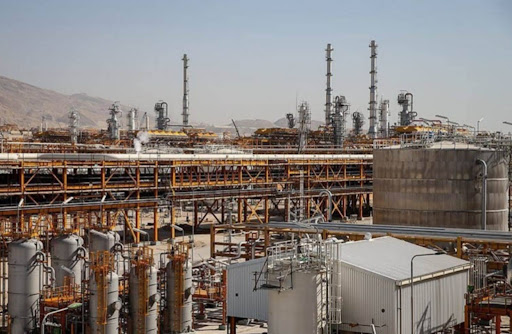
Iran gave Gulf neighbors a matter of hours to evacuate energy sites on Wednesday after Israeli bombs struck the South Pars gasfield in the first attack on Iran’s fossil fuel infrastructure since the conflict began. The Revolutionary Guards named specific facilities in Saudi Arabia, the UAE, and Qatar and ordered immediate evacuation. Oil prices surged toward $110 a barrel as the threat of sweeping energy infrastructure strikes became critically real.
South Pars, the world’s largest natural gas reserve, is jointly managed between Iran and Qatar. The Israeli strike — carried out with reported US approval — was unprecedented in its targeting of Iran’s core energy assets. Washington and Tel Aviv had deliberately avoided striking Iranian fossil fuel infrastructure throughout the conflict, understanding that doing so risked triggering an uncontrollable economic chain reaction. That constraint had now been abandoned.
Threatened facilities announced by Iran’s state media included the Samref refinery and Jubail complex in Saudi Arabia, al-Hosn gasfield in the UAE, and Mesaieed and Ras Laffan in Qatar. All personnel were told to leave immediately. The governor of Asaluyeh province said the conflict had entered a full-scale economic war and called the US-Israeli escalation “political suicide” that would have severe and lasting consequences.
Brent crude climbed to $108.60 per barrel — a nearly 5% gain on the day — while European gas markets surged more than 7.5%. Gulf oil exports had already fallen 60% from pre-war levels due to infrastructure damage and Iran’s Strait of Hormuz blockade. Iran had continued to export its own crude through the strait while blocking its Gulf neighbors’ shipments, an imbalance that had given Tehran a significant economic advantage throughout the conflict.
Qatar’s government spokesperson warned that attacking energy infrastructure posed a serious threat to global energy security and the welfare of millions. With evacuation orders issued and Iran’s countdown underway, the world was facing a scenario that combined military escalation with energy warfare on an unprecedented scale. The consequences for global energy supply — and the economies that depended on it — were potentially vast and long-lasting.