
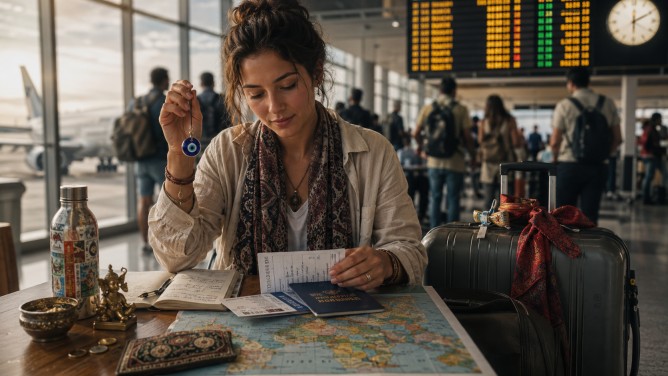
Traveling the world is often accompanied by a range of traditions and rituals that add a unique layer of excitement and meaning to the journey. Across various cultures, travelers have embraced distinct superstitions aimed at attracting good luck and ensuring safety during their travels. Here are some intriguing travel superstitions that are still practiced in different regions today.
In the Balkans, garlic is traditionally seen as a powerful ward against negative energy and the evil eye. Many travelers from this region place a clove of garlic in their luggage before embarking on a trip, believing it serves as a talisman against bad luck. Similarly, some travelers have developed the habit of touching or tapping the exterior of an aircraft before boarding, a gesture believed to bring good fortune and provide comfort to anxious flyers.
Beginning a trip “on the right foot” holds literal significance for some, as they step onto an aircraft with their right foot first, considering it a positive omen for the journey ahead. In parts of the Middle East and the Balkans, it’s customary for families to pour or sprinkle water behind someone who is leaving, symbolizing a desire for a smooth and safe journey and the hope of a safe return.
Numbers can also hold special meanings in travel superstitions. While the number 13 is often avoided in Western countries due to its unlucky connotations, in China, the number 4 is similarly shunned because it sounds like the word for death. In Italy, the number 17 has traditionally been considered unlucky. These beliefs can influence decisions related to hotel room numbers, building floors, and other travel arrangements. Additionally, a traditional Slavic custom involves sitting quietly on packed luggage before departing, providing a moment of reflection and mental preparation.
Some cultures hold the belief that sweeping the floor immediately after a traveler leaves could sweep away their good fortune or hinder their safe return. While these customs lack scientific grounding, they remain an intriguing part of travel culture. For many, these rituals are less about the efficacy of superstitions and more about maintaining family traditions, cultural heritage, and the joy of embarking on a new adventure.