
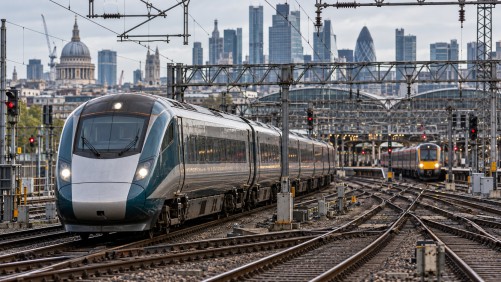
The Office of Rail and Road (ORR) has rejected proposals for new direct train services between London and Wrexham, as well as London and Rochdale, due to limited capacity on the heavily trafficked West Coast Main Line. The regulator’s decision highlights concerns about the potential for increased delays and reduced reliability on the line, which is already operating near its limits.
The ORR’s assessment concluded that the southern section of the West Coast Main Line lacks the capacity required to accommodate additional services without compromising performance. This decision aligns with previous rejections of similar proposals, as the regulator continues to prioritize maintaining schedule reliability and allowing time for trains to recover from disruptions.
In addition to the Wrexham and Rochdale routes, plans for extra London-Blackpool services were also turned down. The regulator emphasized the need for timetable gaps to prevent delays from cascading across the network, which is crucial for maintaining overall service efficiency.
Despite these rejections, the ORR did approve an additional evening service from London to Chester, operated by Avanti. This service will utilize a train that would otherwise return to its depot without passengers, thus offering a new travel option for commuters without impacting capacity constraints significantly.
The proposed Wrexham service aimed to establish a direct link between the Welsh town and the capital, while the Lumo service would have connected Rochdale directly with London. However, the current infrastructure limitations render these plans unfeasible at this time.
This decision underscores the challenging balance between expanding service offerings and maintaining a reliable railway network, as the ORR continues to manage the complexities of train service demands on one of the UK’s busiest lines.